If work also takes place at night, simply covering the shifts is not enough: the law requires night work to be managed as a risk in its own right, with precise rules on who may perform it, how it must be assessed and what checks are required. For an employer or anyone responsible for safety, the key is to understand what is genuinely mandatory without getting lost between the two overlapping decrees. This guide sets out the points that matter: who qualifies as a night worker, the risks to monitor, health surveillance, assessment in the DVR and the criteria for organizing shifts.
Who is considered a “night worker” under the law
The first step is to distinguish between two concepts that are often confused. Italian Legislative Decree 66/2003 defines the night period as an interval of at least seven consecutive hours that includes the period between midnight and 5:00 a.m.; schedules such as 10:00 p.m.–5:00 a.m., 11:00 p.m.–6:00 a.m. or midnight–7:00 a.m. fall within this definition.
Being a night worker is a different matter. Not everyone who happens to work a few hours at night qualifies: the status applies to anyone who ordinarily performs at least three hours of their working time during the night period or, unless the collective bargaining agreement provides otherwise, anyone who works at night for at least 80 days per year, pro-rated for part-time employees. This distinction matters because the related protection obligations arise from it.
A working-time limit also applies: night workers may not work more than an average of eight hours in any 24-hour period. Always check the applicable CCNL (national collective bargaining agreement), as it may specify thresholds, the reference period and the relevant time band.
Why night work is a risk that must be managed
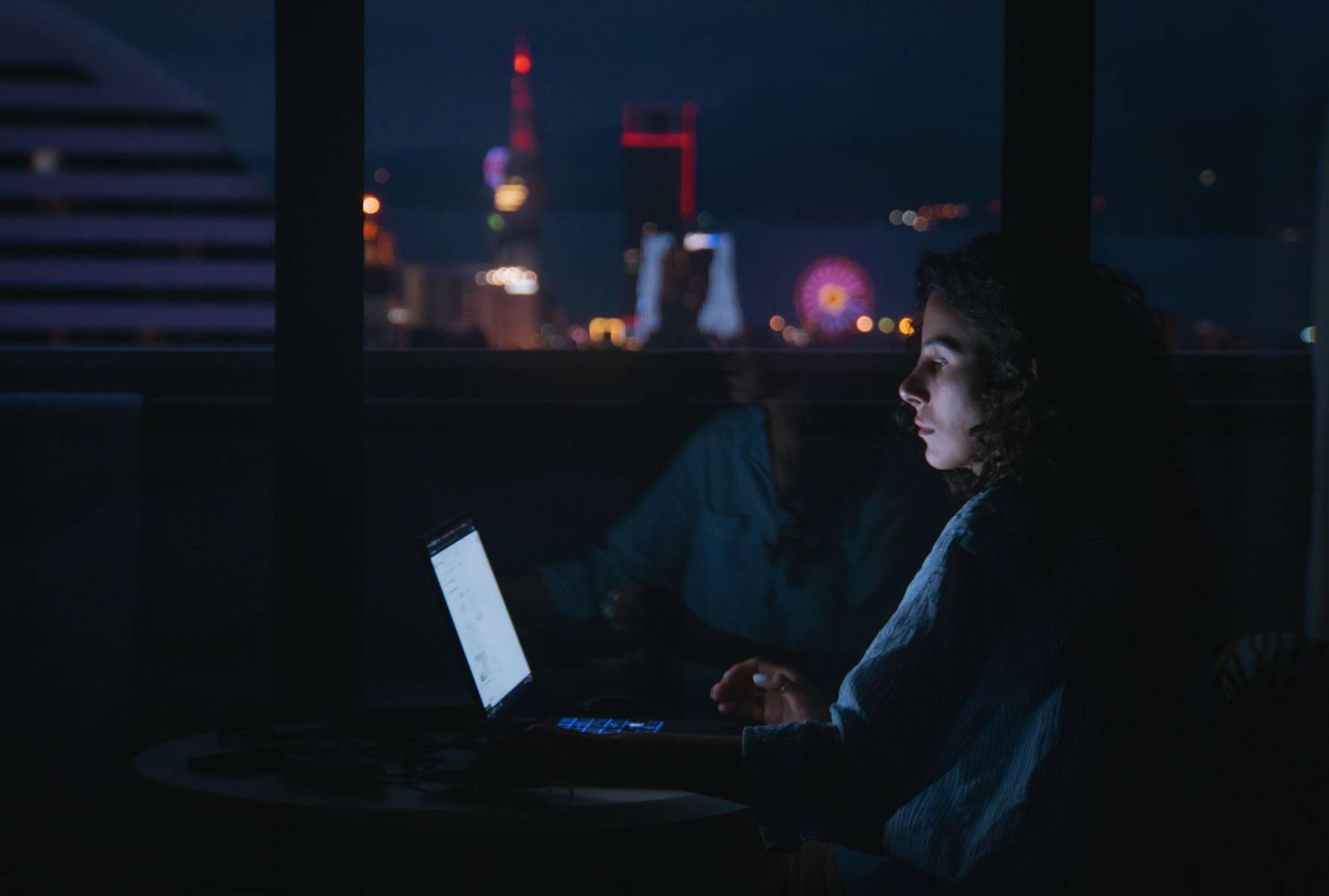
Working when the body is programmed to sleep disrupts the circadian rhythm, the biological clock that regulates sleep and alertness. The risks of night work that prevention measures must address therefore include fatigue, drowsiness, reduced attention, sleep disorders and, over the long term, a greater burden on the cardiovascular system and metabolism.
From a health perspective, the International Agency for Research on Cancer (IARC–WHO) has classified shift work involving disruption of circadian rhythms as “probably carcinogenic” (Group 2A): this indicates a probable association, not a proven cause, and should be communicated with this precision and without alarmism.
There is also an immediate safety issue: as alertness declines, the risk of errors and accidents increases, with incidents concentrated in the final hours of the shift, toward dawn. This is why the law requires employers to assess and organize the work, rather than merely comply with a timetable.
Night work in the DVR: assessing the risk
Every company with employees must assess all risks and record them in writing: night work must be included in the risk assessment and addressed in the Risk Assessment Document (DVR). It is not enough simply to state that night shifts exist; the company must analyze how they interact with the job, the work environment, workloads, lone working and emergency procedures.
In practice, the DVR must consider fatigue and reduced attention, psychosocial risks linked to the impact on family life, workplace lighting and the management of the most critical activities at night. This is where the RSPP and the employer translate the risk into concrete measures.
If you need to prepare or update the document to account for night shifts, you can use our DVR preparation service, managed by our technical specialists.
Health surveillance, fitness and exemptions
Health surveillance is mandatory for night workers. The employer appoints the occupational physician, who carries out a preventive examination before the person is assigned to night work and then periodic examinations, normally at intervals of no more than two years, unless the physician sets shorter intervals based on the risk.
The examinations lead to a fitness-for-work assessment. If a worker is found unfit for night work, the company must assign them to equivalent daytime duties, where available. This does not automatically lead to dismissal; the situation must be managed case by case.
Certain categories may not be assigned to night work. Pregnant employees may not work between midnight and 6:00 a.m. from confirmation of pregnancy until the child’s first birthday. An exemption may be requested by parents of children under three, the sole custodial parent of a cohabiting child under twelve, and anyone caring for a person with a severe disability under Law 104. Night work is generally prohibited for minors. You can coordinate medical examinations and the health-surveillance protocol through our occupational health consultancy.
Organizing night shifts to reduce risk
Shift scheduling is itself a preventive measure. Several well-established criteria help reduce the risks of night shifts and protect the people who work them:
- Prefer forward rotation (morning, afternoon, night), which the body tolerates better than reverse rotation.
- Limit consecutive night shifts and ensure adequate rest and breaks between shifts.
- Provide suitable workplace lighting and carefully manage handovers during periods of lower alertness.
- Inform and train workers on sleep management, nutrition and signs that should be reported to the occupational physician.
There is no single schedule that works for every company: it must be tailored to the sector, the job and the applicable CCNL. Training, however, remains a cross-cutting legal requirement: our worker safety training course also covers risks associated with working hours.
Bringing night work into compliance, without complications
Managing night work means bringing together four elements: understanding who truly qualifies as a night worker, assessing the risks in the DVR, activating health surveillance and organizing shifts sustainably. These requirements are interconnected, and it is understandable not to want to manage them alone. We handle this process every day, with real consultants and compliant documents valid throughout Italy. If you are introducing or reviewing night shifts, talk to us: we can support you with the DVR, health surveillance and training, or with the employer-as-RSPP course if you personally manage prevention activities.
Customer frequently asked questions
Here are the most common questions we receive from our customers.
- Who is considered a night worker under Italian law? Anyone who ordinarily performs at least three hours of their working time during the night period—the seven-hour interval that includes midnight to 5:00 a.m.—or, unless the collective bargaining agreement provides otherwise, anyone who works at night for at least 80 days per year. Always check the applicable CCNL, which may further define the criteria.
- Must night work be included in the DVR? Yes. It must be considered in the risk assessment and addressed in the Risk Assessment Document, analyzing how it interacts with duties, the work environment and workloads. Merely noting its existence is not enough: concrete preventive measures are required.
- How often must night workers undergo medical examinations? A preventive examination is required before assignment to night work, followed by periodic examinations, normally at intervals of no more than two years. The occupational physician may set a shorter interval depending on the risk.
- Can a pregnant employee work night shifts? No. Work between midnight and 6:00 a.m. is prohibited from confirmation of pregnancy until the child’s first birthday. Parents of young children and caregivers covered by Law 104 may request an exemption.
- What penalties apply if the obligations are not met? Breaches concerning health surveillance and risk assessment may result in criminal or administrative penalties for the employer, with amounts varying according to the breach and the number of workers involved [amounts to be checked against the legislation currently in force]. It is better to prevent problems by bringing documents and checks into order in good time.