
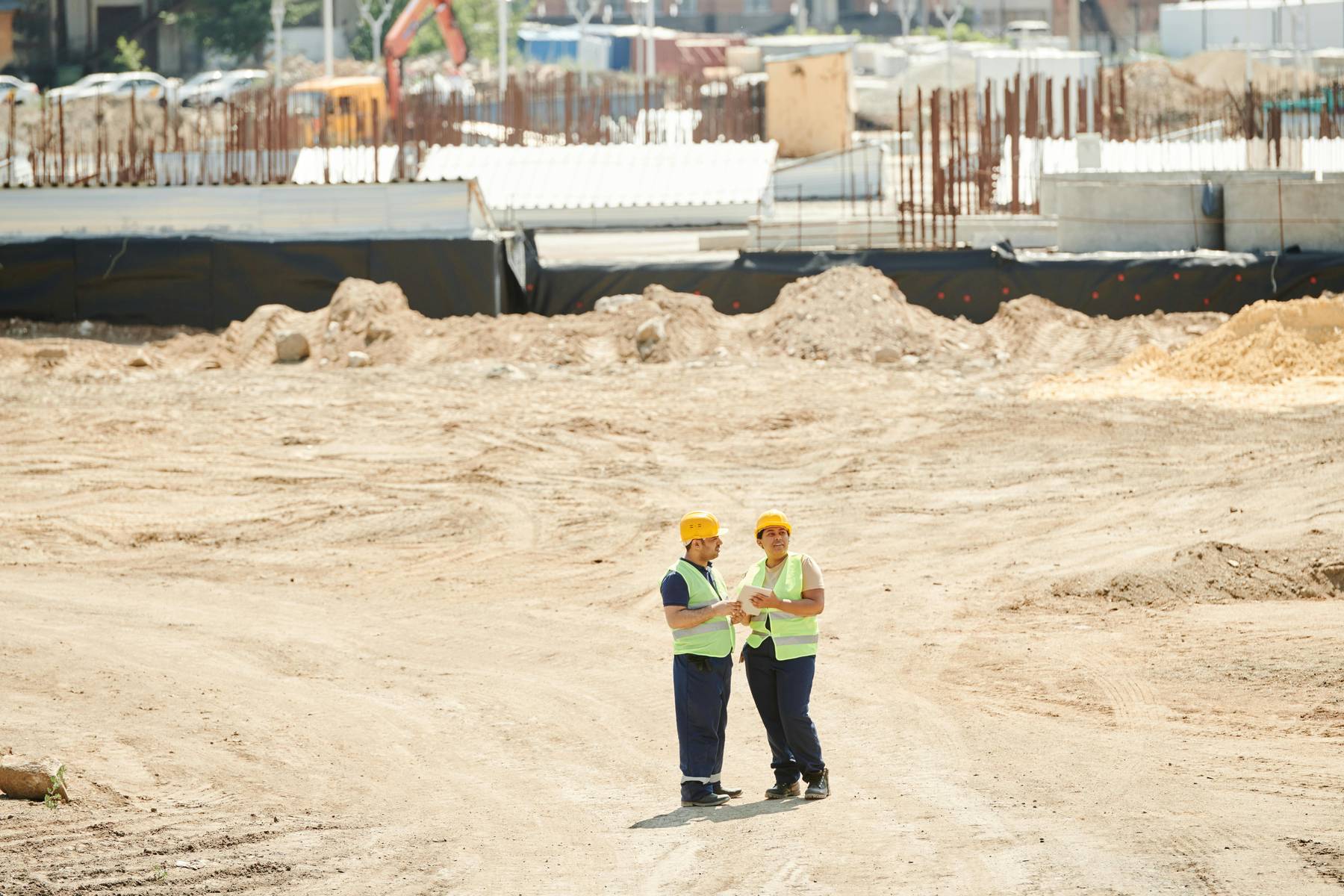
With the arrival of the warmer season, seasonal work increases—especially mobile and temporary construction sites. Whether it’s a road work site, maintenance activities, or more complex building work, it’s essential never to neglect safety.
The role of the supervisor (preposto): who they are and what their responsibilities are
But who is the preposto? In the workplace—particularly on construction sites—the preposto is the person appointed to supervise workers’ activities, ensuring that safety rules are followed. They are not just an inspector: the safety supervisor is a direct on-site point of reference, the first to step in when risky behavior or dangerous conditions occur.
To take on this role, it is mandatory to attend a specific supervisor training course, designed to train those who must oversee daily site activities and actively contribute to accident prevention.
Seasonal sites: risks not to underestimate
Seasonal work—often organized under tight deadlines and with temporary staff—can hide pitfalls that must not be ignored. It is quite common to find workers without adequate training or sites where safety documentation is handled superficially.
Even if the intervention lasts only a few days, it is essential to comply with all regulations: every construction site, even the smallest one, must have a POS (Operational Safety Plan), drafted consistently with the actual working conditions.
The POS: more than a document, real protection
The POS safety document, required by law even for mobile and temporary sites, is used to identify the specific risks of each intervention and to precisely define the preventive measures to be adopted. The POS is often confused with the PSC (Safety and Coordination Plan). The difference is simple: the PSC is prepared by the safety coordinator on sites where multiple companies operate, while the POS is the responsibility of the executing company—even when it works alone.
Self-employed workers, if involved in site activities, must also prepare a POS: no one is excluded. A good POS document, moreover, cannot be just a copy-and-paste: it must describe in detail the risks present in a specific context, indicate the measures adopted to eliminate and/or reduce them, provide a clear work organization, and also include the emergency and evacuation plan, with practical instructions on what to do in case of fire, collapses, or other critical situations.

Mandatory training: the first tool for prevention
Safety always starts with mandatory general training, and this also applies (and especially so) in seasonal contexts. Beyond the supervisor course, every worker must attend specific training based on the risk they are exposed to. In building and road works, this is often high risk, so targeted courses are needed to provide practical and up-to-date knowledge.
Through these training paths, workers learn to recognize hazards in their work environment, adopt safe behaviors, and correctly use personal protective equipment (PPE). But it’s not just theoretical knowledge: training builds awareness and responsibility—two essential elements for working safely.
Safety doesn’t go on holiday!
Every site, every supervisor, every worker has a role to play. If you are about to start a temporary activity, or if you are a worker preparing to enter a new operational context, make sure you have all the necessary and mandatory tools to work: being informed, trained, and protected is the only way to work well.